 Cerebral palsy is a nonprogressive condition, but that doesn’t mean mobility needs stay the same over time. For adults in their 30s, 40s, and beyond, accumulated stress on bones and muscles can take a toll, causing pain and stiffness – and the need for different ways to support mobility.
In recognition of this year’s World Cerebral Palsy Day, we spoke with Dylan Warrington, a Mobility Clinical Specialist at Cionic who has worked closely with adults with cerebral palsy throughout his career.
Here's our conversation, edited for length and clarity:
What kinds of changes can adults with cerebral palsy expect to feel in their 30s and 40s?
Dylan: As adults with cerebral palsy move into their 30s and 40s, they may experience increases in pain and fatigue, and decreases in mobility. Those changes can also take a toll on mental health because it’s natural to get tired of feeling pain and stiffness. People may start to feel these changes in their 20s, but as you get into your 30s, 40s, and beyond, those effects compound.
How does aging impact fatigue?
Dylan: The big thing behind fatigue is elevated energy expenditure. Someone with cerebral palsy is going to have to work three to five times harder to do everyday activities because they’re literally fighting their body, which may be pulling in a direction they don’t want to be going. They’re expending both physical and cognitive energy and that leads to overall exhaustion or premature burnout.
What do those changes look like in someone’s day-to-day experience?
Dylan: It means that activities someone has always done, like walking or exercising, may become harder. Or it may mean that they feel tired more quickly. They may still enjoy the activity while they’re doing it, but also experience the mental toll of recognizing that they can’t do it at the same level. There can also be secondary health issues, like osteoarthritis and osteopenia, as well as a decline in balance.
Another thing we often see is more reclusiveness – people may start to disengage from social situations or attend gatherings less frequently because they don’t want to be a burden, so it’s all-encompassing.
What are the most effective ways to offset these changes?
Dylan: While changes are a part of aging for everyone, there are definitely exercises and interventions that can help. In my opinion, the most important thing for people to do as they get older is myofascial release – any kind is invaluable. It can be seeing a massage therapist, or even having a friend or loved one work on them. There are also self-myofascial release techniques, like foam rolling or trigger point release with a tennis ball.
It makes a difference because it relaxes the muscles. With spasticity and tone, which are very common for people with cerebral palsy, the muscles are involuntarily tightening and constricting. When we help them relax and release, we enable a better range of motion and improved blood flow, which aids recovery.
What kinds of exercises are most helpful for adults with cerebral palsy?
Dylan: Cerebral palsy can cause joints to get pulled in different directions that are unwanted. So we’d recommend exercises that oppose the direction that their muscles are pulling. So, for example, if someone has issues with knee valgus, where their knees are collapsing in towards each other, that’s going to cause hip internal rotation or adduction. So we’d recommend an exercise to counter it, like a glute bridge with hip abduction, pushing the knees outward against some kind of resistance. Another example is if someone has knee flexion, where their knees stay in a bent position, we’d suggest targeted leg straightening or knee extension exercises.
And then I would say the last thing would be lower-impact cardio. If people do well with walking or running, that’s great. But if they want lower impact exercises, cycling and swimming are also very helpful. Water takes gravity out of the equation, so people find a lot of relief by just having their body suspended in water, and then swimming is just a great cardiovascular activity. And then if leg movement is more of a struggle, hand-cycling can be a great option as well.
Over time, as mobility declines increase, what should people keep in mind?
Dylan: Be even more intentional. And what that means is trying to prioritize what is the most important, because when somebody experiences greater mobility declines, usually their battery, or energy level, runs lower. Maybe their fuse is shorter, or frustration can happen in the snap of a finger. That can lead people to abandon activities and exercises, so we try to find the ones that are most easily accessible and make them feel the best, and then figure out how to fit that into their daily routine.
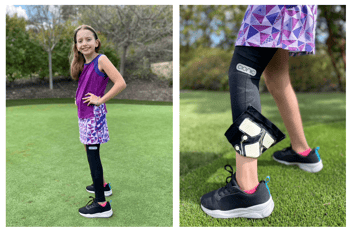
For people who have the Neural Sleeve 2, the access to sensory stimulation can be a great thing because it’s an entirely passive experience. All it requires is putting the sleeve physically on their leg, and they can just set it and forget it. And it’s an effective way to address muscle tone and relax the muscles, with very minimal input. They can use it while sitting down or watching TV.
What are some of the best ways to improve mental health?
Dylan: When we think of reclusiveness and decreased mental health, a lot of times it’s going to stem from loneliness. It’s going to stem from pulling yourself away from friends and family. I think the best thing that anybody can do is establish community. Because usually those people you’re going to surround yourself with are people that are trying to uplift you. So it could be reaching out to family or friends, finding a regular exercise buddy nearby, or even going online and finding a virtual support group. Getting outside of your comfort zone can be tough, but community is huge.