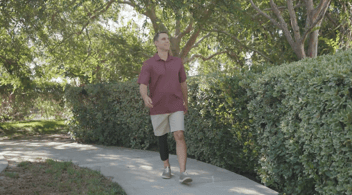
Mark Zhang has a quick answer for anyone who assumes the Department of Veterans Affairs is slow to change. The VA's acting assistant undersecretary for health points to a list of firsts that came out of the agency: the liver transplant, the nicotine patch, the pacemaker, and electronic health records long before they were standard. The approach now, he told MobiHealthNews in January 2026, is to "move fast responsibly."
For the more than 9.1 million veterans enrolled in VA health care, that shows up as real options. Medical technology has moved veteran care beyond medication and hospital hallways into FDA-cleared wearables, video visits, virtual reality programs, and adaptive equipment that works at home.
This overview is for veterans and for the people who help them navigate care: spouses, adult children, caregivers, and friends. Here is what is changing, which technology is involved, and how to start the conversation with a VA care team.
Why Veteran Care Is Changing
The Veterans Health Administration is the largest integrated health care system in the country, delivering care at 1,380 facilities, including 170 VA medical centers. Many of the veterans it serves live with conditions that affect movement and daily life, including stroke, multiple sclerosis, traumatic brain injury, spinal cord injury, and PTSD.
For decades, the main tools were medication, in-person physical therapy, and standard equipment. Those tools matter. They also leave gaps. Medication can bring side effects. Physical therapy appointments end. A clinic visit can be a real barrier for a veteran who lives an hour from the nearest VA facility, or for the family member doing the driving.
The VA has organized itself around closing those gaps. Zhang described five innovation offices inside the Veterans Health Administration, from the Innovation Ecosystem, which connects frontline staff with outside companies and supports regional innovation centers, to X_Labs, an internal lab he compares to DARPA. All five, he said, point at the same target: the future of veteran care.
How Veterans Access Mobility Technology
The VA has a dedicated pathway for this kind of technology. Its Prosthetic and Sensory Aids Service (PSAS) provides assessments, funding, training, and follow-up, and it is the largest and most comprehensive provider of prosthetic devices and sensory aids anywhere. More than half of veterans enrolled in VHA receive prosthetic services.
Cionic works directly with VA facilities, including a clinical partnership with VA Rocky Mountain in Colorado, and has a dedicated program for veterans. Veterans and family members interested in the Neural Sleeve can start the conversation with a VA provider or mobility care team.
Telehealth Brings VA Care Home
A clear change has been the availability of telehealth. VA Video Connect, the VA's secure video visit app, connects veterans with providers for primary care, mental health, and specialty visits. In a single recent fiscal year, more than 1.9 million veterans took part in more than 10 million video visits through the app.
For veterans without reliable internet at home, two VA programs are worth knowing about:
- ATLAS. Accessing Telehealth through Local Area Stations sets up private appointment rooms at community sites such as American Legion and VFW posts, with an on-site attendant to help with the equipment.
- Digital Divide Consult. A VA social worker helps a veteran find internet service or a connected device so video visits are possible from home.
Remote patient monitoring adds another layer. Connected devices share information like blood pressure, heart rate, or activity with a care team between visits, so small changes get noticed early.
Mental Health Technology Beyond Medication
Med tech is also reshaping how veterans care for their mental health. For veterans managing PTSD, anxiety, or depression, and for the people supporting them, the VA now points to several named tools that work alongside, or sometimes instead of, medication.
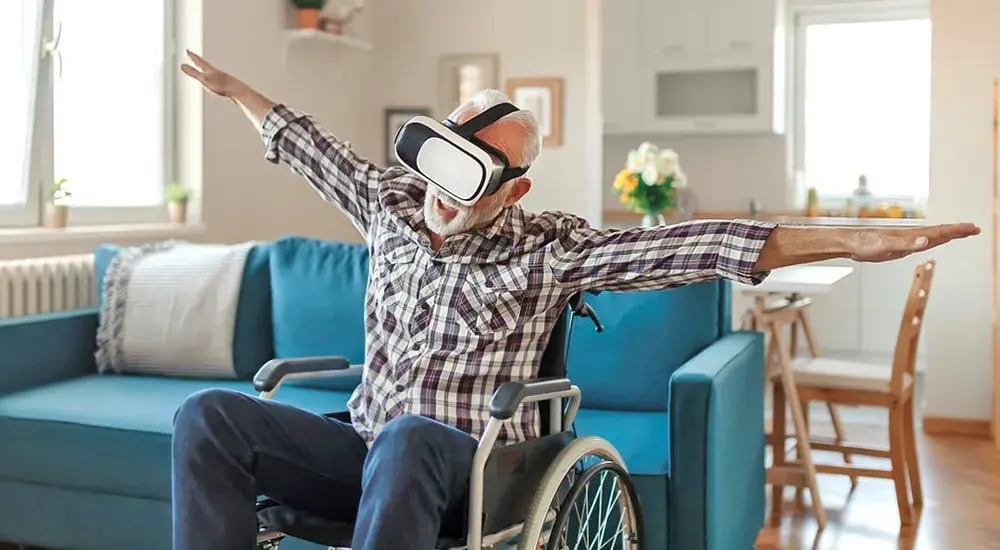
Image Source: VA.gov
- Virtual reality for mental health care. VA Immersive, the VA's extended reality program, has reached more than 145 facilities. One example is BraveMind, a virtual reality program for post-traumatic stress built by the VHA Innovation Ecosystem with the nonprofit SoldierStrong. Commercial platforms such as PsyTech VR support exposure work for PTSD, phobias, and trauma-linked anxiety, with a behavioral health provider adjusting intensity and pacing. (VA Immersive also supports physical rehabilitation and pain management, which are separate uses of the same technology.)
- Guided breathing devices. CalmiGo is a handheld device that uses real-time feedback to slow breathing and ease acute stress in minutes. In 2025 it became available to VA and Department of Defense health systems through the VA Federal Supply Schedule.
- Transcranial magnetic stimulation (TMS). A noninvasive brain stimulation treatment, FDA approved for depression and offered at VA medical centers when medication and talk therapy have not helped enough. The VA's Center for Compassionate Care Innovation has supported expanding it, including work at the Providence VA Medical Center on its use for PTSD.
- Light-based brain stimulation. The Vielight Neuro, a photobiomodulation device, was selected by the Center for Compassionate Care Innovation for use in traumatic brain injury clinics.
Access varies by diagnosis, provider recommendation, and facility. The common thread is choice: veterans have more ways to find what works for them.
Wearable Technology and Veteran Mobility
One of the most active frontiers in veteran care is happening in wearables. Not fitness trackers, but FDA-cleared medical devices that work with the body to support movement.
Powered Exoskeletons the VA Already Provides
Exoskeletons arrived first. The VA maintains a national policy under which veterans with spinal cord injury can be evaluated for a personal ReWalk exoskeleton, with evaluation at one of the VA's designated spinal cord injury centers and supervised training before a device goes home. Ekso Bionics' Indego Personal system has followed a similar path into VA medical centers, sometimes with help from nonprofits: SoldierStrong donated an Indego system to VA Augusta's spinal cord injury unit in 2023.
Those systems are designed for people who need external support to stand and step. A different category of wearable works with the muscles a person already uses.
Bionic Clothing That Supports Walking
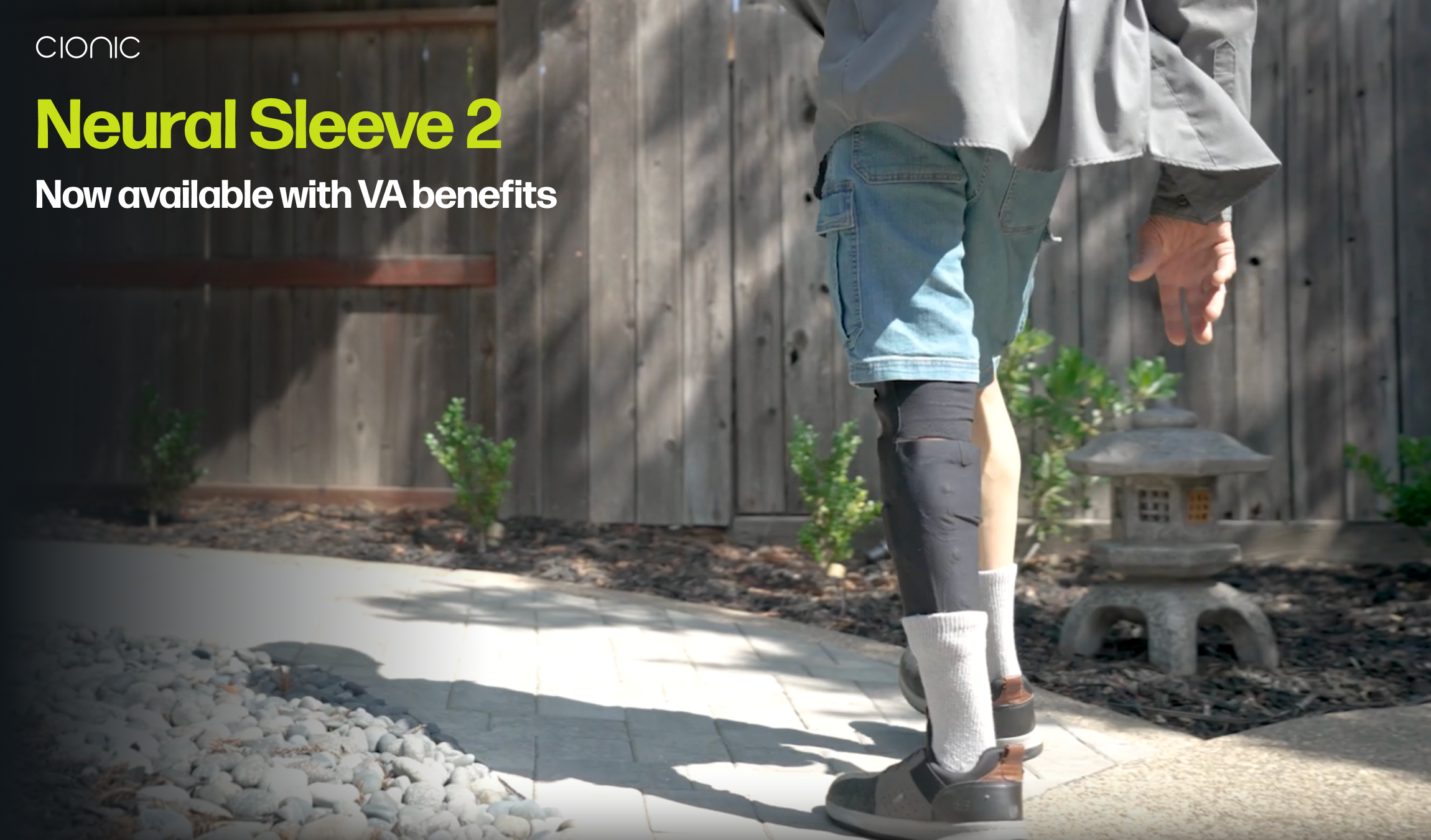
One example is the Neural Sleeve 2 from Cionic, a form of bionic clothing worn on the leg. It's FDA-cleared to improve walking and relax muscle spasms. Sensors in the sleeve read how a person moves, and AI-powered algorithms deliver precise muscle activation at the right moment in each step.
For veterans living with foot drop or leg weakness after a stroke, or with MS, that support shows up in everyday moments: crossing a parking lot, taking the stairs, keeping pace with grandkids.
The results are measurable. In back-to-back paired tests, 94 percent of participants improved their gait while wearing the sleeve. The device supports people across more than 20 diagnoses, and TIME named the Neural Sleeve 2 one of its Best Inventions of 2025.
Muscle spasms deserves a mention here. Spasticity is common after stroke and with MS, and the muscle spasms that come with it can make walking harder, disrupt sleep, and cause pain. The Neural Sleeve 2 is the first FDA-cleared system to simultaneously relax muscle spasms while improving walking.
Adaptive Equipment and Everyday Independence
Beyond wearables and mental health tools, PSAS supports a wide range of adaptive equipment: wheelchairs, home modifications, vehicle adaptations, and assistive technology for daily tasks.
VA Adaptive Sports and Arts takes it further, pairing equipment with community. The office runs six national events a year, including the National Veterans Wheelchair Games, co-presented with Paralyzed Veterans of America, and administers a grant program that funds community adaptive sports programs in all 50 states. Family members are often welcome as spectators, volunteers, or travel support.
How to Ask Your VA Care Team About New Technology
New technology only helps if veterans can get it. The VA has laid out the path, and the criteria are more transparent than people expect. One thing to keep in mind: the VA care team, not the device manufacturer, determines what a veteran is eligible for.
- Start with the VA provider. Describe the challenge in plain terms, whether that is walking, sleep, stress, or getting around the house.
- Ask about a prosthetic or assistive technology consult. PSAS evaluates which devices fit a veteran's care plan. General eligibility runs through enrollment in VA health care plus a documented medical need, with additional criteria for specific programs.
- Name specific devices. Providers can research options like the Neural Sleeve and determine eligibility. Cionic's veterans page has details worth bringing to an appointment.
- Ask about training and follow-up. PSAS covers fitting, training, and ongoing support, so a device becomes part of daily life rather than a drawer item.
Eligibility depends on diagnosis, provider recommendation, and local facility policy, so answers can differ from one VA to the next. If you are supporting a veteran, writing the questions down ahead of time and taking notes during the visit helps a lot. Asking is free.
What's Next for Veteran Care
As for what's ahead, it looks like the pace is not slowing. While speaking with MobiHealth, Zhang pointed to X_Labs, the VA's moonshot lab inside the Seattle VA Medical Center, and its current project, BioBone, which explores 3D printing bone from a veteran's own tissue for procedures such as oral and maxillofacial surgery. His framing: if 20th century medicine was defined by being evidence based, this century will be defined by hyper-personalization, through genomics, through artificial intelligence, and eventually through parts built from you. The VA's Advanced Manufacturing office exists to produce what the agency cannot buy off the shelf.
Mobility technology sits on the same curve. Devices get smarter through software updates, the same way a phone improves without a new purchase. Sensors get better at reading each person's movement. Data flows between veterans, devices, and care teams.
At Cionic, we think of it as building a new operating system for human movement, and veterans are central to that mission. The people who served deserve care that keeps pace with what technology can do, so they can walk further, faster, and fearlessly.
If you are a veteran navigating a mobility challenge, or you are helping someone who is, take our two-minute assessment to see whether the Neural Sleeve fits into your care, or visit our veterans program page to learn how Cionic works with the VA.
Frequently Asked Questions
What technology does the VA offer veterans?
The VA offers veterans a growing range of technology, including video visits through VA Video Connect, remote patient monitoring, FDA-cleared wearable devices, virtual reality through VA Immersive, and adaptive equipment. Access typically runs through a veteran's VA care team, which can evaluate needs and connect the veteran with the right program or device consult.
Does the VA cover assistive technology?
Yes. Through its Prosthetic and Sensory Aids Service, the VA provides assessments, funding, training, and follow-up for assistive technology when a VA provider determines a device supports a veteran's care. General eligibility requires enrollment in VA health care and a documented medical need, and coverage also depends on diagnosis, provider recommendation, and local facility policy.
How do veterans get medical devices through the VA?
Veterans usually start by talking with their VA provider and requesting a consult with the Prosthetic and Sensory Aids Service or an assistive technology specialist. If the provider determines the device fits the veteran's care plan, the VA can supply it, arrange fitting and training, and provide follow-up support.
Can technology help veterans with mobility challenges?
Yes. Veterans living with stroke, MS, spinal cord injury, or other neurological conditions can benefit from mobility technology ranging from adaptive equipment and powered exoskeletons to FDA-cleared wearables like the Cionic Neural Sleeve, which uses targeted muscle activation to help improve walking and relax muscle spasm during everyday activity.
What is the VA doing to modernize veteran health care?
The VA runs five innovation offices inside the Veterans Health Administration, expanding telehealth, rolling out a new electronic health record, scaling immersive technology through VA Immersive, and funding early-stage work through X_Labs. The goal is to give veterans more ways to receive care at home and more options beyond medication alone.
Does the VA use virtual reality in mental health care?
Yes. Through VA Immersive, VA behavioral health teams use virtual reality for exposure work and emotional regulation, helping veterans address PTSD, anxiety, and phobias in a controlled setting. A provider can adjust intensity and pacing, which allows the technology to support multiple stages of treatment. VA Immersive also supports physical rehabilitation, pain management, and recreation therapy, which are separate uses of the same technology.
How can a family member help a veteran get new technology through the VA?
Family members and caregivers can help by attending appointments, writing down questions in advance, taking notes, and asking directly about a prosthetic or assistive technology consult. Bringing product information to the visit gives the provider something concrete to evaluate. The VA care team makes the final eligibility determination.